User personas
During every project, the 2 major people that are really more involved in getting the API we need is either the developer or founder/project manager. The founder/project manager choosing what to pay for, and the developer who has to make it work.
| The founder | The developer | |
|---|---|---|
| Who they are | Early-stage founder building a product for Nigerian users, often non-technical | Developer at a startup or agency, integrating APIs into a client or company product |
| Goal | Pick providers that work in Nigeria and fit the budget, then launch quickly | Find an API that does the job, read the docs and ship the integration |
| Needs | Clear pricing, cheaper alternatives, and a quick way to compare providers | Auth method, rate limits, sandbox access, supported regions and a link to the docs |
| Challenges | Pricing is hidden or "on request", and finding out often means booking a meeting with each provider | Docs are scattered, local providers rank poorly on Google, and AI answers are often out of date |
| Where they look | Google, ChatGPT or Grok, and advice from other founders | Dev communities, colleagues at work, Google and ChatGPT |
The Research
I listed the questions I and other Nigerian builders kept asking, then checked where the answers lived. Most were spread across provider websites, Twitter threads and word of mouth as some are not even well SEO to show up on google.
Questions builders ask & where they do it
- “Which payment gateway works best here?”
- “What will this API cost us?”
- “Is there a cheaper alternative?”
- “Which KYC provider can verify BVN?”
- “Which SMS API actually delivers?”
- “Where are the docs?”
- “I searched Google for it.”
- “I asked ChatGPT or Grok.”
- “A friend recommended it.”
- “A colleague at work uses it.”
- “Someone in a dev community mentioned it.”
Competitive analysis
I looked at where builders already go to find an API, and what each option leaves out for someone building in Nigeria.
| Where builders look | What it is | Nigerian coverage | Details you get | What is missing |
|---|---|---|---|---|
| Google search | General web search | Weak. Many local providers rank poorly | Whatever each provider SEO says | Users dig into docs, or book a meeting to get details they need |
| ChatGPT and Grok | AI chat answers | Patchy and often out of date | AI-generated summaries | Summaries without a verified source |
| RapidAPI Hub | Global API marketplace | Few Nigerian providers | Endpoints, plans and in-browser testing | Built for global APIs. Local APIs are missing |
| Public APIs | Open GitHub list of free APIs | Very little | One line and a link per API | Free APIs only, no pricing or local focus |
| Liners | Review directory for African software, like a local G2 | Strong. Nigeria has the most listings | Reviews, features, alternatives and a link to API docs | APIs are lost among thousands of platforms listed, and not API focused |
| afro.tools | Open-source registry of African API specs for AI coding agents | Africa-wide, about 18 APIs | Endpoints, auth, sandbox and gotchas | Small catalogue, built for AI agents, not humans |
| Word of mouth | Friends, colleagues and dev communities | Strong but informal | Personal experience | Scattered, and depends on who you know |
| BuildStudio NG | Curated API directory for Nigerian founders and developers | Built around Nigerian providers, 50+ categories | Highlights, auth, rate limits, sandbox, regions and alternatives | One place to compare before booking a meeting if need be. |
Structure and flows
Scope
The first version focused on the directory: every category, every API, one consistent card. Tools for hosting, launching and matching came next, once the directory was useful on its own.
How I set it up
- – A listing site that is easy to scan, not a marketing page
- – A dark, code-editor style that feels native to developers
- – Every category in a sidebar that is always visible
- – Each API card shows the provider name and a one-line summary of what it does
- – Programmatic SEO listing
- – An SEO page for every single API
- – Programmatic SEO feature-listing pages
- – API comparison SEO pages
- – X and LinkedIn, where Nigerian web developers spend time
- – Next.js: the site and its SEO pages
- – Redis: caching for fast page loads
- – Neon: Postgres database for the API listings
- – PostHog: product analytics
- – Vercel: hosting and deploys
- – Gemini API: the AI API Matcher and Ask BuildStudio
- – Grok and Claude Opus: curating the API data
Building with AI
Ideation
The layout went through three versions before it shipped.
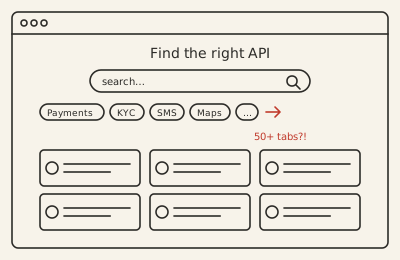
A search bar with category tabs to filter by. I dropped it once I saw how many API categories there would be: far too many for a row of tabs.
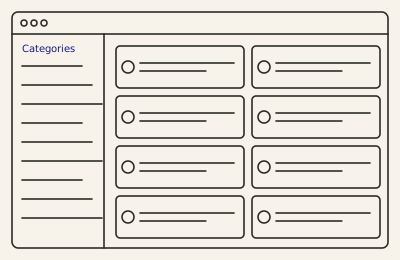
Every category moved into a left sidebar, with providers listed two in a row. It handled the long category list, but left no room for anything else.
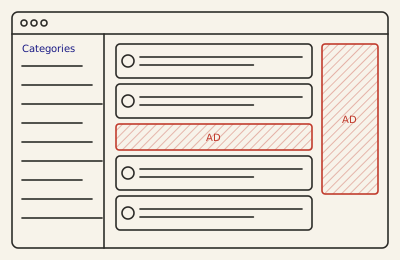
To make the site earn, I added ad banners. I restructured the listing to one provider per row, with banners on the right side and in between listings.
How I built it
I designed and shipped in the same sitting. Antigravity and Claude Code were my build partners. They let me take an idea from sketch to live feature in days instead of weeks, and spend my time on structure and content rather than boilerplate.
The core pages
Three page types do most of the work: the homepage, one detail page per API, and a listing page for every category.
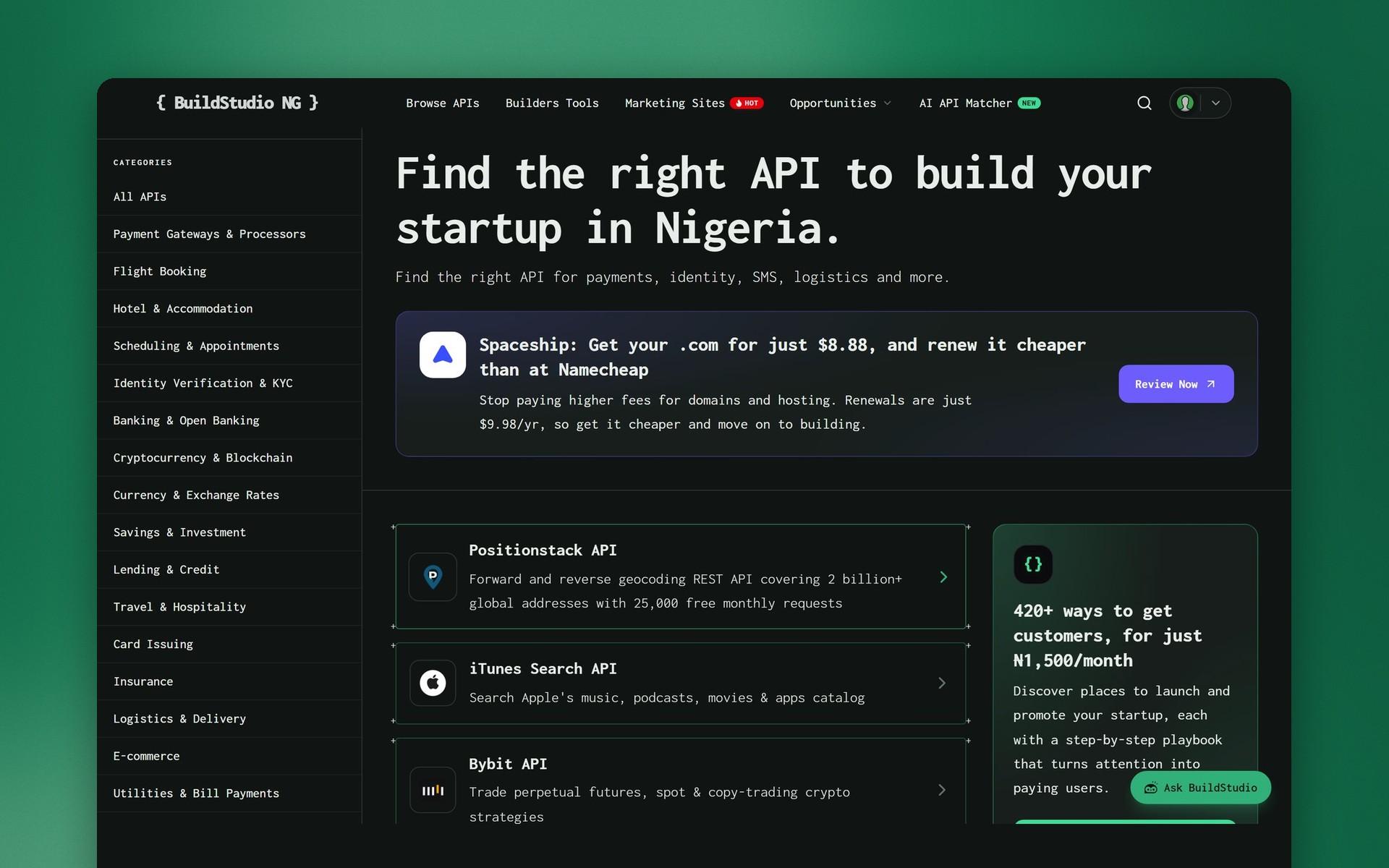
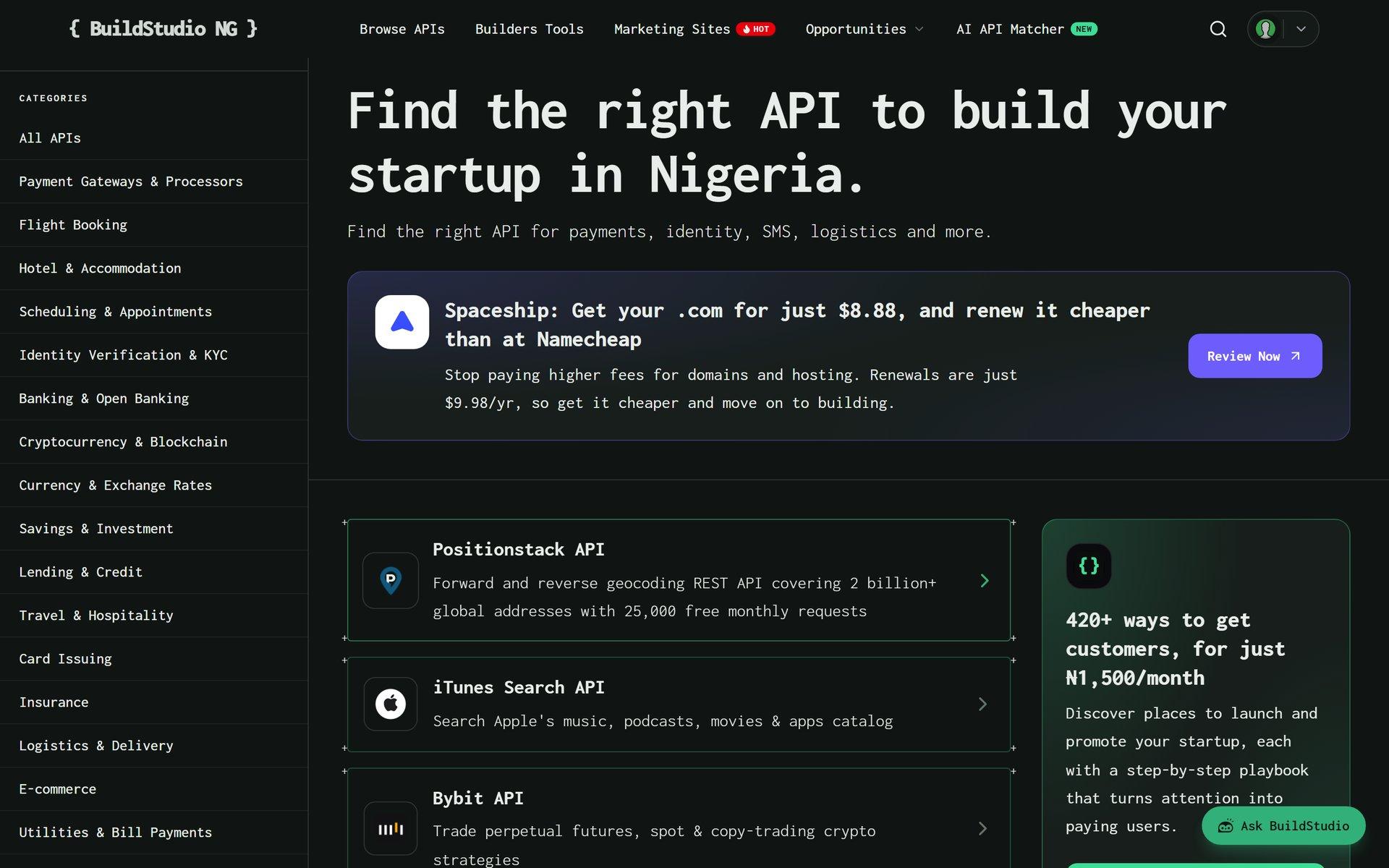
[1] Homepage
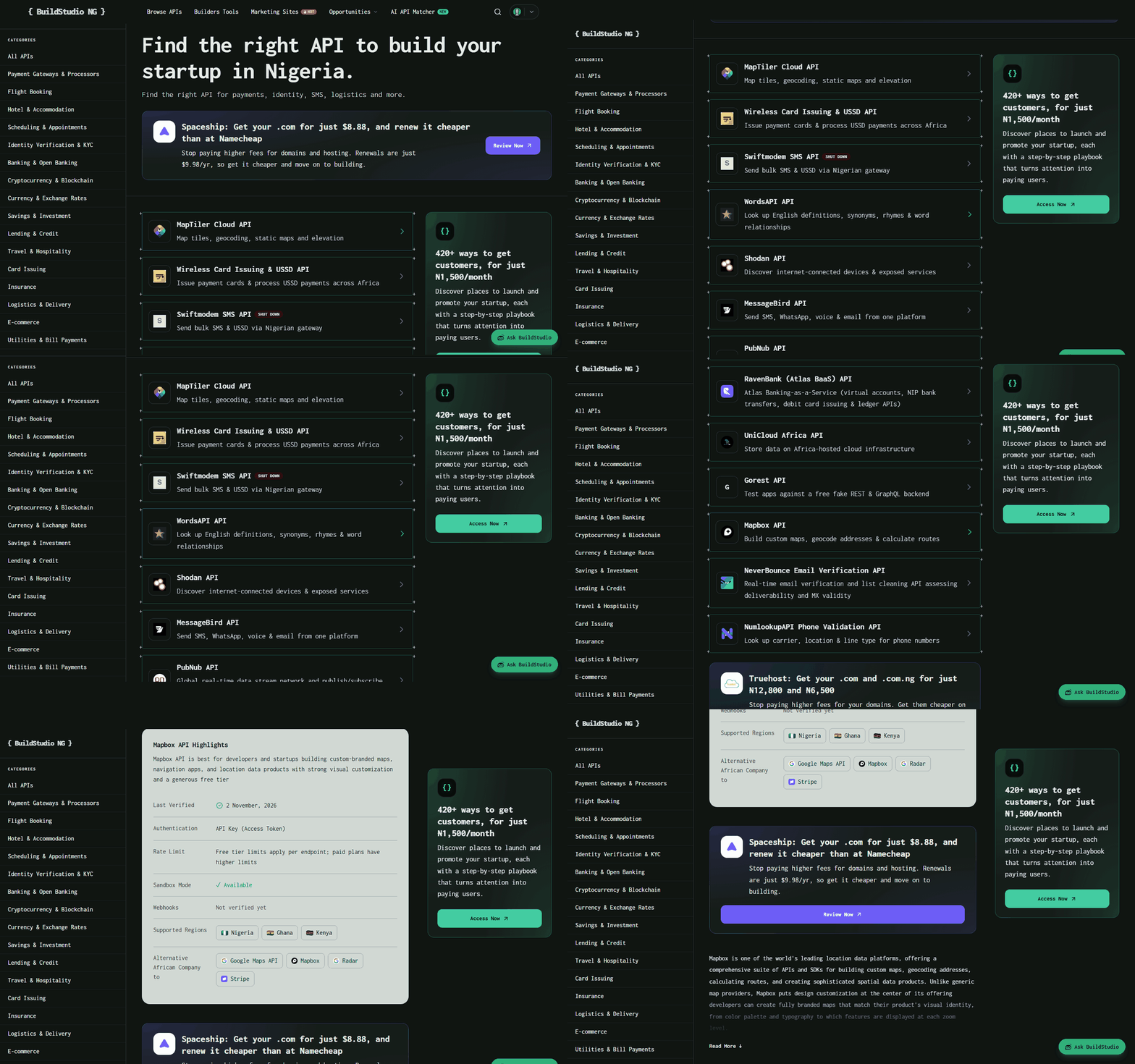
Every category sits in the left sidebar, with providers listed one per row.
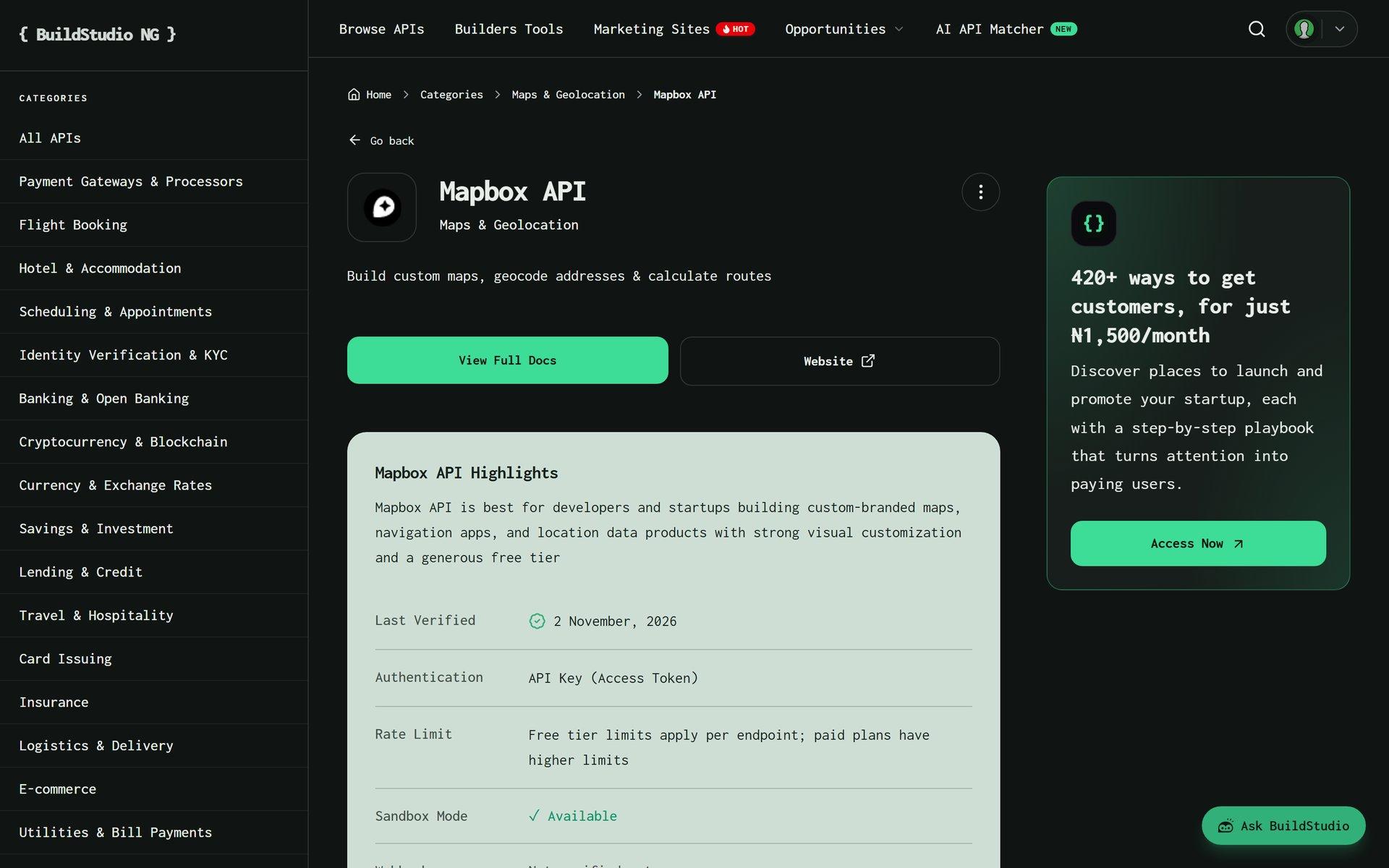
[2] API detail page
One page per API with highlights, authentication, rate limits, sandbox access, supported regions and alternatives.
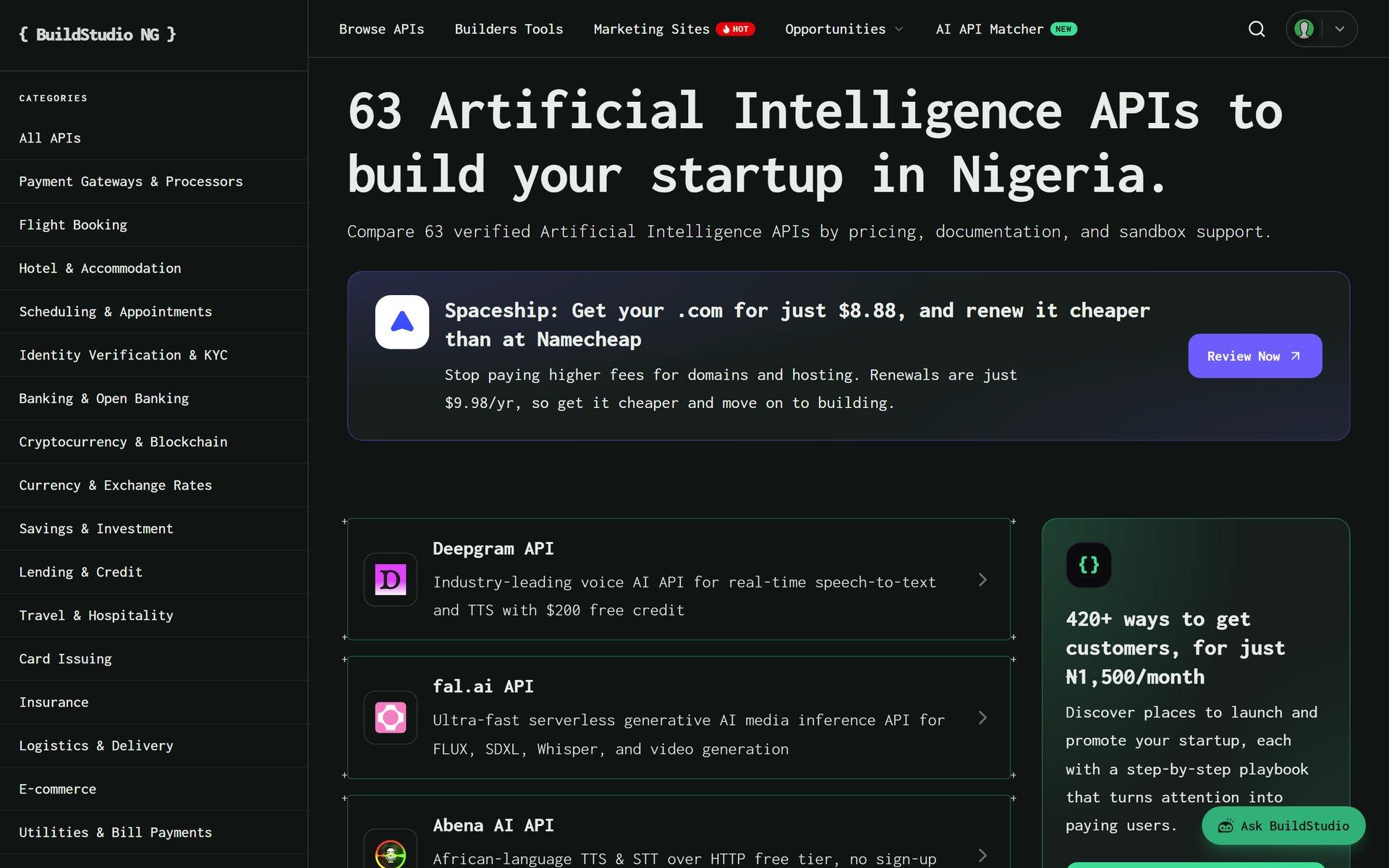
[3] Category listing page
Each category gets its own SEO page, like 63 Artificial Intelligence APIs, compared by pricing, docs and sandbox support.
Beyond the directory
Once the directory was useful on its own, I added five tools around it.
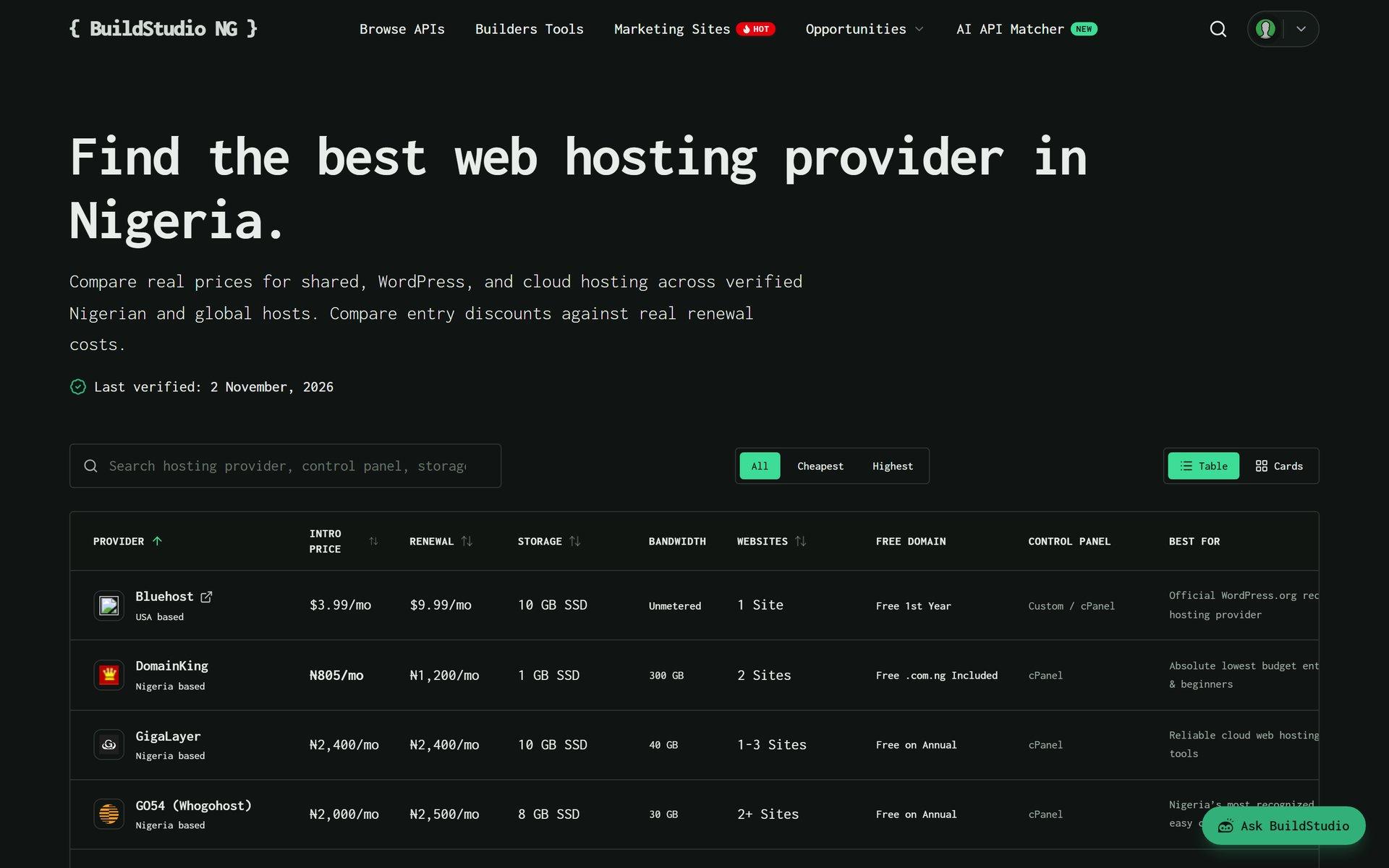
[1] Hosting comparison
Intro and renewal prices for Nigerian and international hosts in one table, so builders see the real cost after year one.
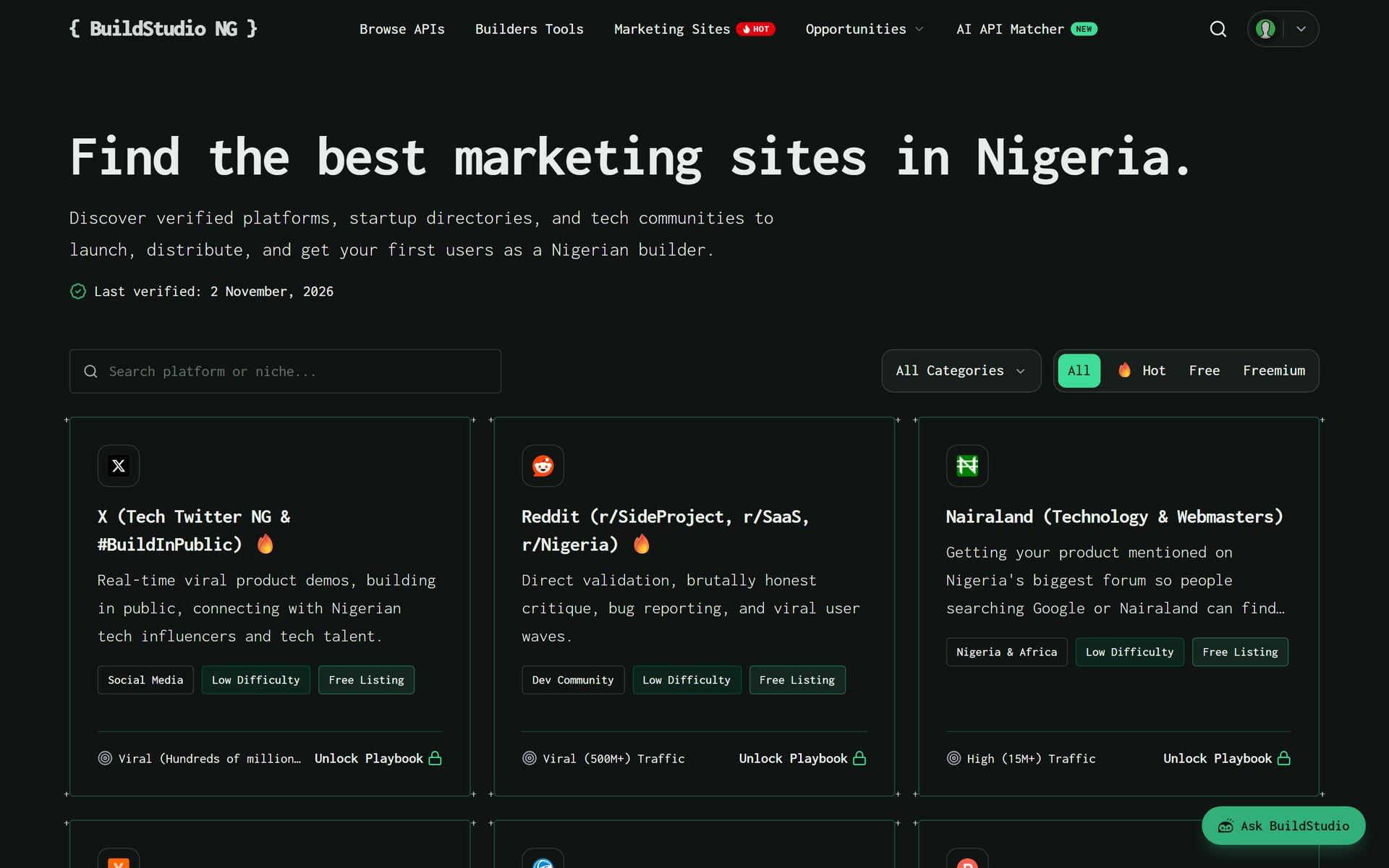
[2] Marketing-sites playbook
Places to launch and promote a startup in Nigeria, like X, Reddit and Nairaland, each with a step-by-step playbook.
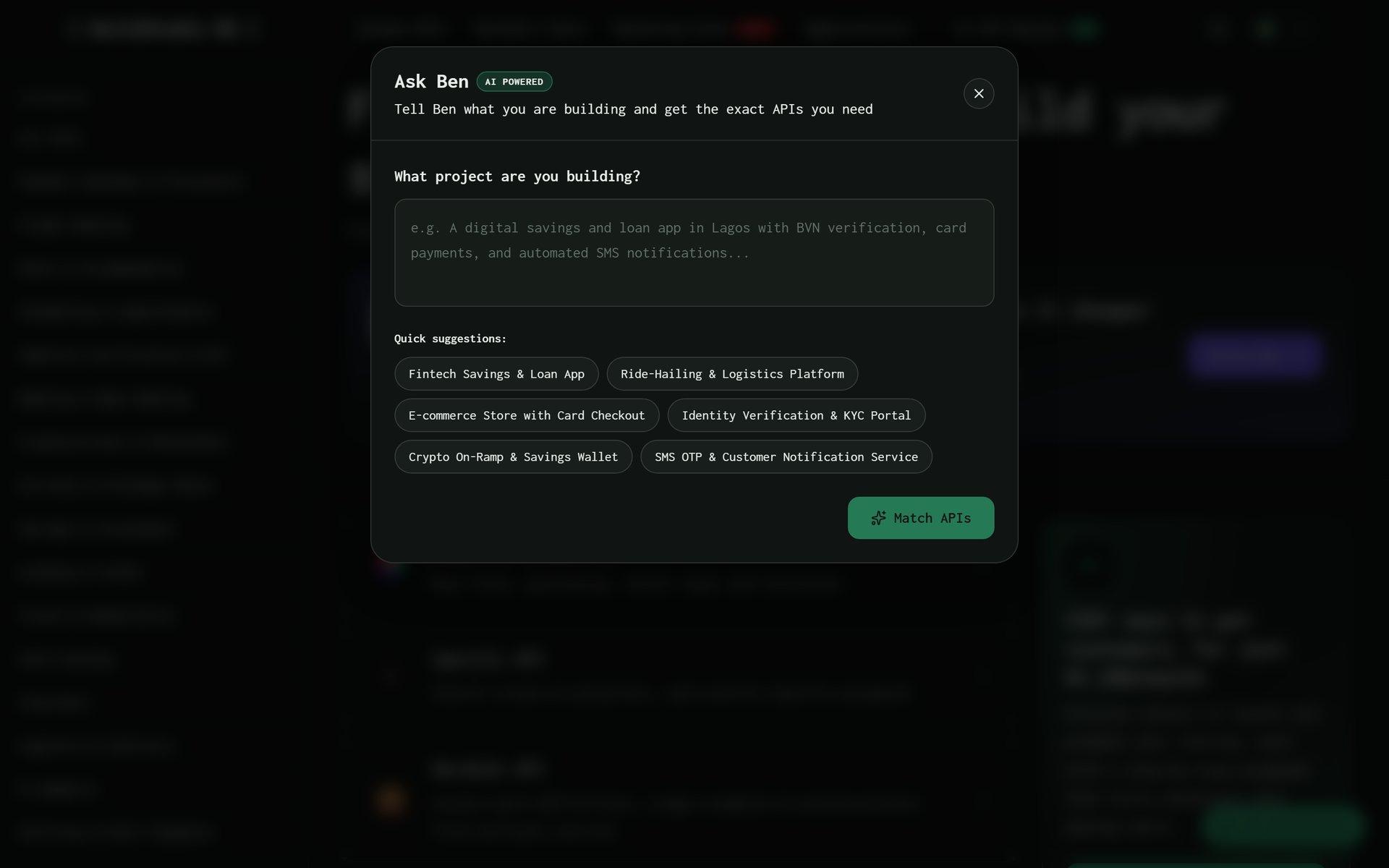
[3] AI API Matcher
Ask Ben, the AI matcher: describe what you are building and get the exact APIs you need.
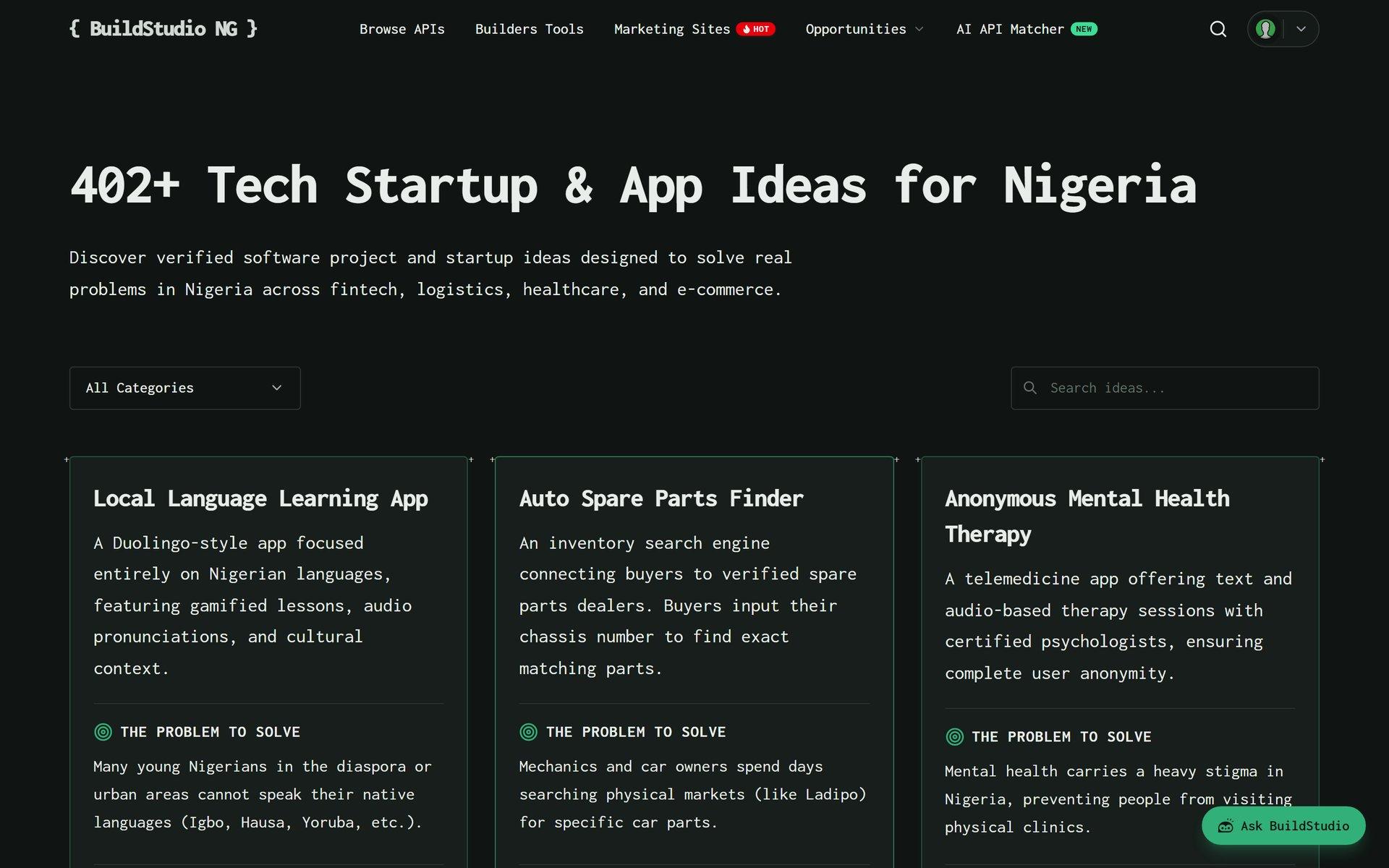
[4] Idea Parlour
400+ startup and app ideas for Nigeria across fintech, logistics, healthcare and e-commerce, for builders who need a starting point.
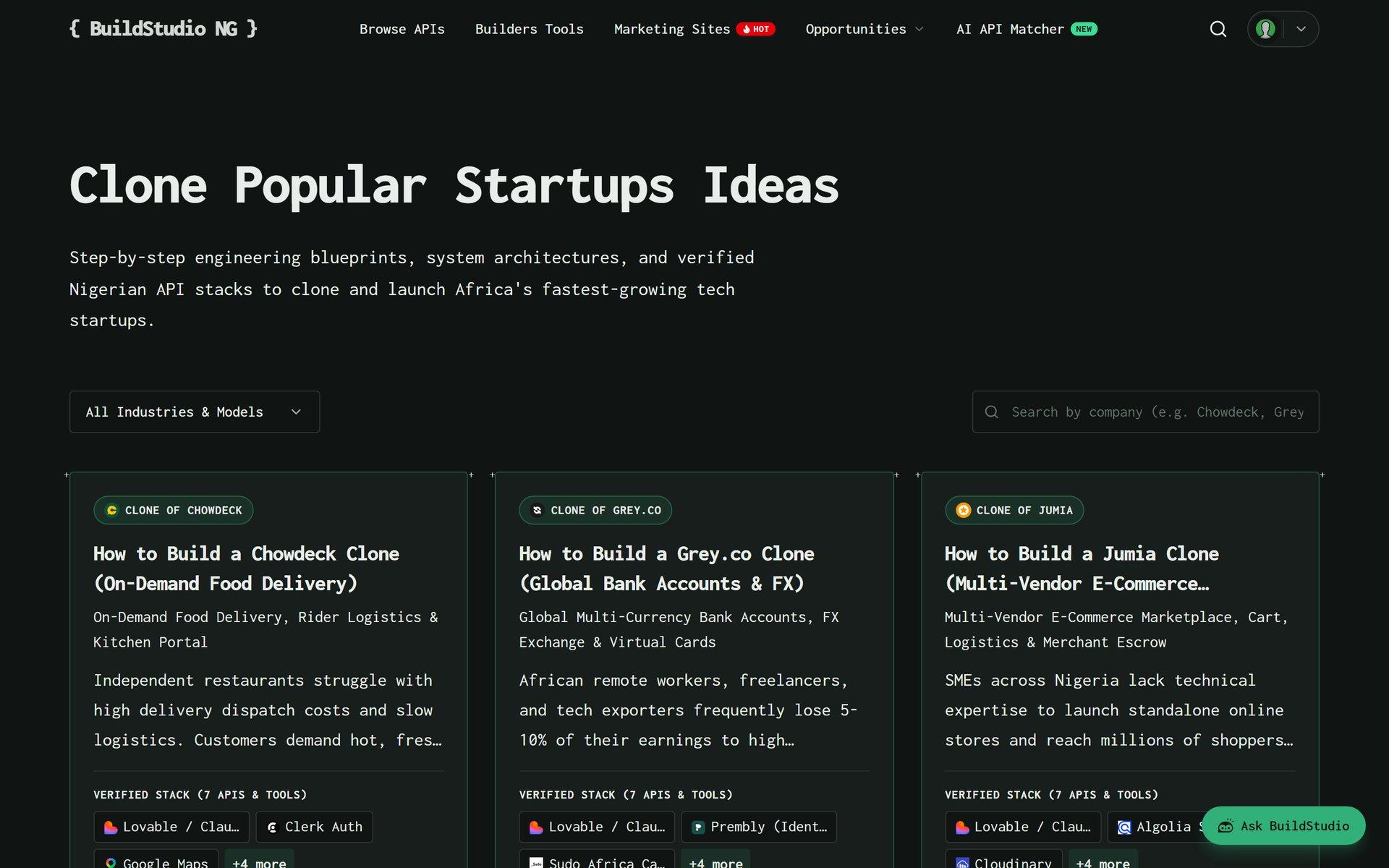
[5] Clone Ideas
Step-by-step blueprints for cloning popular African startups, with system architecture and the Nigerian APIs to build them.
Outcome
Live, and growing one category at a time.
What I learned
Caching matters more than I thought. I knew about it before, but not to this extent. Overnight after launch, Vercel and Supabase, the database I started with, went over their free tiers and shut the site down. I had to trace the problem and fix it, and caching was the answer.
Put a feedback channel on every product. A simple Google Form on the site brought in requests from real users, which led me to add webhook details under each provider, and marketing sites and more APIs.